


AC Moore Clay & Modeling Supplies
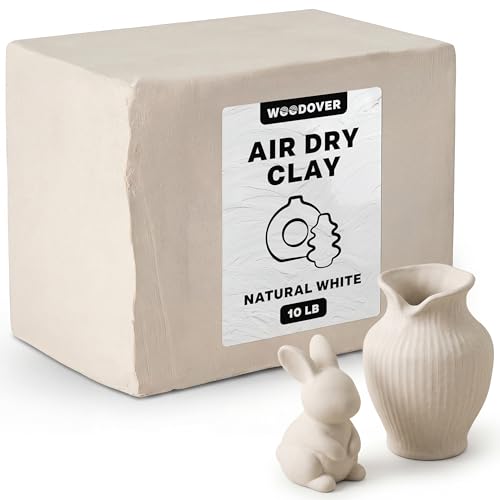
Our premium air-dry clay delivers professional results without the need for a kiln or oven. This smooth, pliable formula dries to a hard, durable finish within 24-48 hours, making it perfect for sculptors, crafters, and school projects.
The clay remains workable for extended periods, allowing you to refine details and make adjustments before it sets. Once dry, your creations can be painted, varnished, or decorated with any acrylic-based medium.
What's included in our clay collection
Clay Types & Applications
We offer ac moore clay formulations designed for every creative technique and skill level. Our air-dry varieties provide convenience for home crafters and classroom projects, requiring no specialized equipment beyond basic sculpting tools.
Polymer clay delivers vibrant color and durability for jewelry makers and miniaturists who need permanent results from a standard home oven. Traditional earthenware serves potters and ceramicists who work with kilns and glazes, while our quick-dry compound supports model builders and prop makers working against tight deadlines. Professional sculptors rely on our oil-based clay for projects that demand endless refinement.
Working with AC Moore Clay
Condition your ac moore clay before starting any project to ensure even consistency and optimal workability. Knead air-dry and polymer varieties for 2-3 minutes to warm the material and eliminate air pockets that could cause cracking or weak spots.
Keep a small spray bottle of water nearby when working with air-dry formulas, as a light mist can restore plasticity if the surface begins to stiffen. For polymer clay, work in a cool environment to prevent premature softening, and use glass or acrylic work surfaces that won’t react with the material.
Tools & Accessories
Basic ac moore clay projects require minimal equipment—your hands remain the most versatile tools. We recommend adding a few specialty implements to expand your creative capabilities and improve precision.
Wire-end tools help carve details and create texture, while ribbon tools remove larger amounts of material quickly. Needle tools score surfaces for strong joins, and soft rubber-tipped shapers smooth seams without leaving fingerprints. Rolling pins or acrylic rods create uniform thickness for slab work, and texture mats add professional surface patterns.
Complete Your Modeling Studio


Rated 4.8 by verified buyers

Questions About AC Moore Clay & Modeling Products
Only our earthenware clay requires kiln firing. Our air-dry clay hardens naturally at room temperature in 24-48 hours, and polymer clay cures in a standard home oven at 275°F. The quick-dry modeling compound sets within 2-4 hours without any heat, while professional sculpting clay remains permanently workable and is not meant for hardening.
Each product description specifies the curing method, so you can choose the right formula based on the equipment you have available.
Our polymer clay colors blend smoothly to create custom shades—simply knead two or more colors together until evenly mixed. Air-dry and quick-dry formulas can also be mixed, though the resulting color may appear slightly mottled when dry.
Earthenware clay should not be mixed with other clay types, as different formulas have varying shrinkage rates and firing temperatures that can cause cracking. Professional sculpting clay maintains a consistent neutral gray and is not available in multiple colors.
Wrap air-dry and quick-dry formulas tightly in plastic wrap, then seal in an airtight container or resealable bag. Store in a cool location away from heat and sunlight. Polymer clay should be rewrapped in its original packaging or plastic wrap and kept below 80°F to prevent premature curing.
Earthenware clay stays fresh in a sealed plastic bag with a damp sponge placed nearby (not touching the clay) to maintain moisture. Professional sculpting clay needs no special storage and can be left uncovered, though wrapping prevents dust accumulation.
Acrylic paint adheres excellently to all our clay formulas once properly cured or baked. For best results, apply a coat of acrylic gesso as a primer to create an even base and improve paint opacity.
Watercolor and tempera can be used on air-dry clay but may reactivate slightly if exposed to moisture. Oil paint works on professional sculpting clay but will not dry on polymer or air-dry varieties. Always seal painted pieces with acrylic varnish to protect the finish.
Partially dried air-dry clay can be reconstituted by kneading in small amounts of water until plasticity returns. Work moisture in gradually to avoid making the clay too wet and sticky.
Completely dried clay can be crushed into powder, soaked overnight, drained of excess water, and mixed with fresh clay (50/50 ratio) for use in less critical projects. The reconstituted clay may have a slightly grainy texture compared to fresh material.
All our clay formulas are non-toxic and conform to ASTM D-4236 safety standards for art materials. Air-dry, polymer, and quick-dry varieties are safe for children ages 5 and up with appropriate supervision.
Polymer clay requires oven baking, so adult supervision is necessary for the curing process. Professional sculpting clay is oil-based and best suited for teen and adult artists. Always wash hands after handling any clay product, and avoid eating or drinking while working.
Air-dry clay works best in sections up to 1.5 inches thick—thicker pieces may crack as the surface dries faster than the core. For larger sculptures, build over an armature or hollow out thick sections.
Polymer clay can be baked in thicknesses up to 1 inch, though baking time increases with thickness (follow package directions). Earthenware clay handles any thickness but requires slow, even drying and controlled kiln firing to prevent cracking. Professional sculpting clay supports unlimited thickness since it never hardens.